
Client:
Goldiblox
Our client is a high-growth skills-building toy company for girls that has launched in 2012 and were already producing over $6 million in annual revenues. They wanted to explore business expansion strategies and new product line options, most likely own branded custom books as content marketing to start. We envisioned a potential full-scale media publishing division, starting with their own unique properties and content to set the tone, to turn “content marketing” as a paid revenue stream.
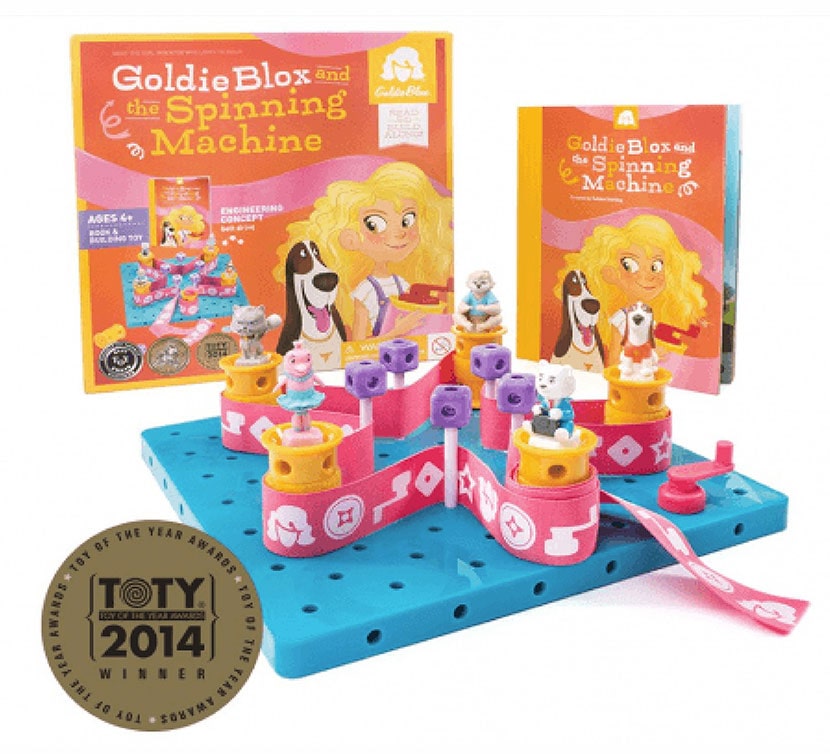
They’d started their business by redesigning traditional games for girls, and had successfully published new fictional booklets and wanted “content of their own” in an own-branded series of books that supported their mission of empowering girls.
The client’s stated audience was “girls, ages 8–18”; we saw the major content gap was for tween to early teen girls. In non-fiction, there were several “self-help” guides for girls (mostly about emotional regulation and some in assertion), and a handful of biographies, mostly limited to entertainment. We scanned top ranked news-articles for female leaders, achievers, celebrities to find cultural focus and prioritization, 80% music and acting celebs, 20% politicos (Hilary Clinton, Sarah Palin), but little on explorers, scientists, freedom fighters, or even “traditional” archetypes such as caregiver (unless one counts Nurse Jackie). However, there were over 1000 individual male hero/anti-hero characters actively disseminated globally, in segment-popular formats (web videos, graphic novels, YA fiction), many outside the traditional warrior archetype model. For young women? Persepolis (unenviable), Ms. Thor (underlying), and Ms. Marvel (unbelievable).
- Women spend $8 billion books/year
- Teens = $5 billion
- Girl teens 13–15 = 6,049,636 U.S. pop
- YA = $3 billion in fiction. 20% CAGR rate
When looking to lit/fic and non-fiction with strong role model protagonists for boys, we found something even more telling.
While there is a general (volume) gap in character-driven empowerment media, there was also a complete lack of range in types of achievement or roles. Which is inherently sexist in and of itself.
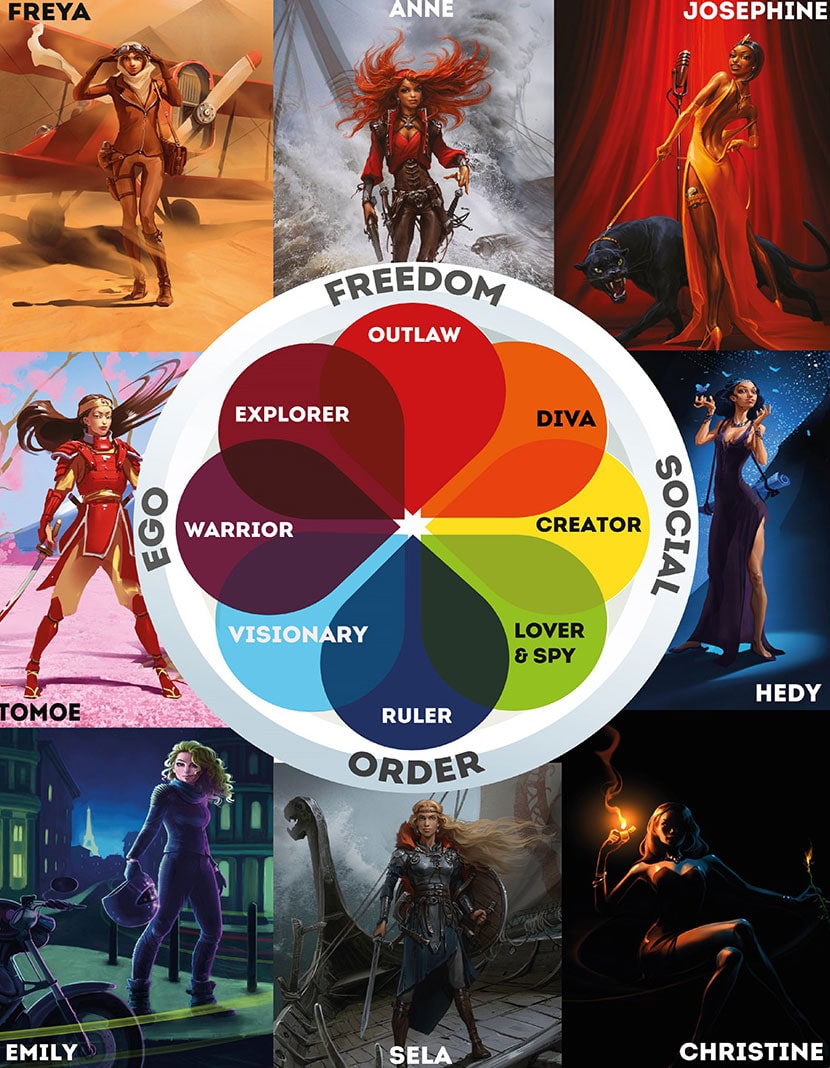
The question of “what is heroic” can be better answered by looking at “what are the range of human archetypes?”.
This lens also helped understand better what was available. For example, “pop entertainment” biographical books, weren’t just about celebrity women in entertainment.
The Sarah Silverman (comedienne), Kate Perry (singer and seductress), and Julia Phillips tell-all bio (producer, truth teller), help illuminate the archetypes of Trickster (& Sage), Lover/Seductress, and Rebel-Leader archetypes, yet still, this is less than 20% of the human spectrum in full development (from archetype to greatness in specific drive/value).
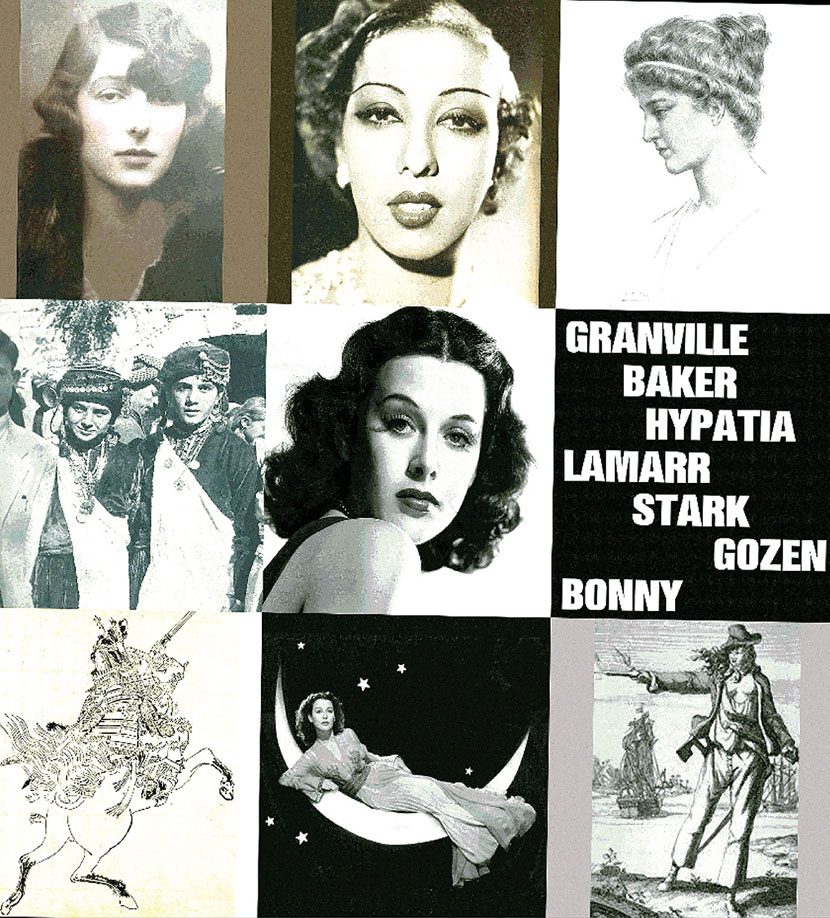
However, it only took 2 weeks of searching primary historical texts to locate over FIFTY significant world-changing women in all fields, covering all archetypes. We selected the dozen we found to have the most dramatic lives (though all led inspirational lives).
The fact most never made it (before) into the pop media spotlight was sinful.
One of the most gratifying parts of the project was in many cases we had to do some serious detective work.
That is, putting together several accounts or records of individuals whose lives hadn’t been properly documented in history, we found new information on both individual, often “solving” a key question left unanswered over time, and learning about the “insider” point of view on key subcultures of the time, from high-society gambling to pirate cultures.
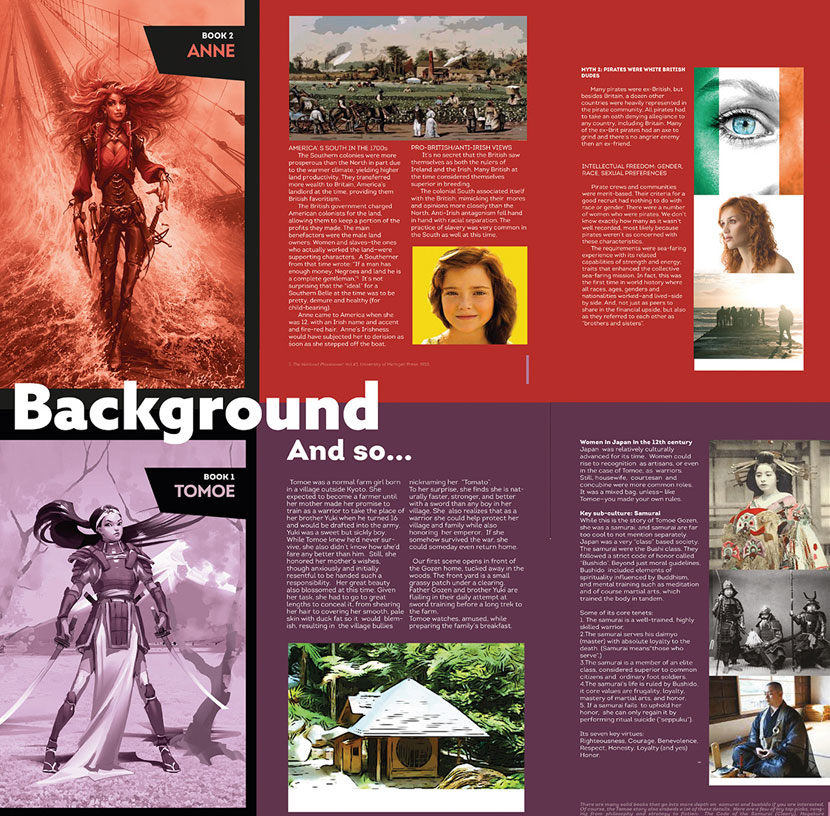
Helping readers model and develop specific heroic habits & behaviors: Infographic heavy heroic how-to development.
As we explored various characters and archetypal profiles, we also noticed key personality traits recur.
These we saw as “traits of greatness”. Having done a “how-too” for developing self-confidence for a prior branded content project, we also learned how to break down, simplify and systematize specifically how to model and develop traits, and to modernize for a contemporary audience, summarize visually in infographic form, and provide daily and weekly checklists and progress tracking for users.
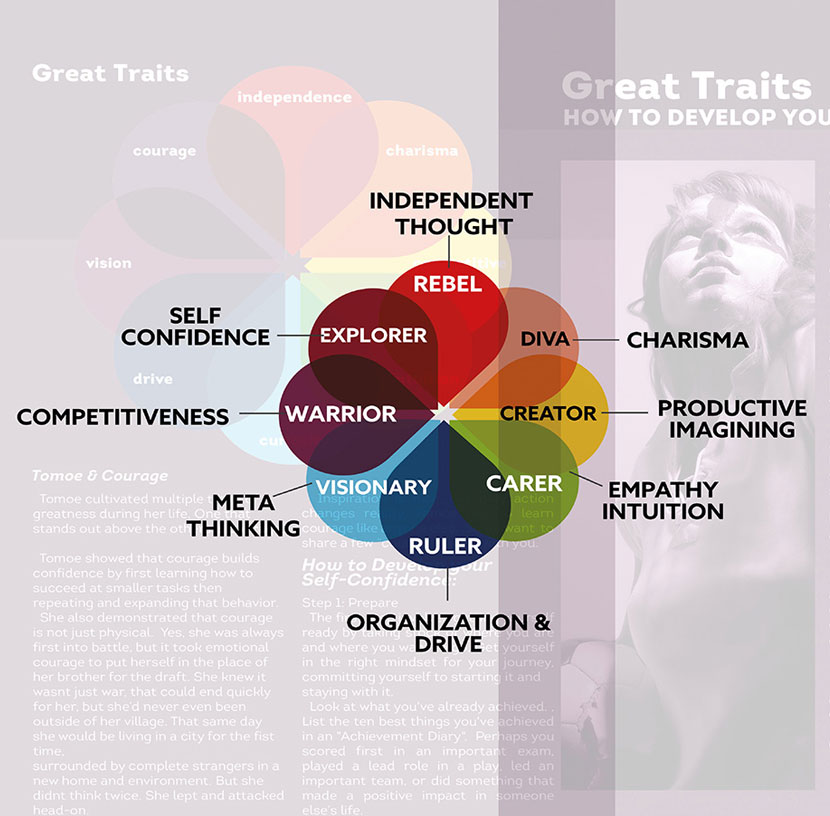
We did the same with Glory Girl. From developing self-confidence, to charisma, to independent thinking skills… every book had its own unique great trait, and this is also why we call the series a “guidebook to the spirit” as girls in self-discovery first find models without knowing specific behaviors to pattern, and as a series, different girls with different drives, can find characters they most associated with through their stories (just like with biographies), but we go a step further and provide actionable guides on how to model specific associated traits with that archetype.
Always in a 3 act heroic drama structure, typically starting out as a child and meeting the challenges of culture, time, and place to face a bigger challenge as a full-formed adult. (No spoilers, so no “resolution” details here. You’ll have to buy a copy yourself to find out).
Tomoe Gozen, from farm girl with unusual secret mentor/mentorship, disguised as a boy when the Japanese military “recruiters” came to her village to take its teen boys off for training and then war, to Samurai General leading the Miyamoto forces in the deciding Battle for Independence…
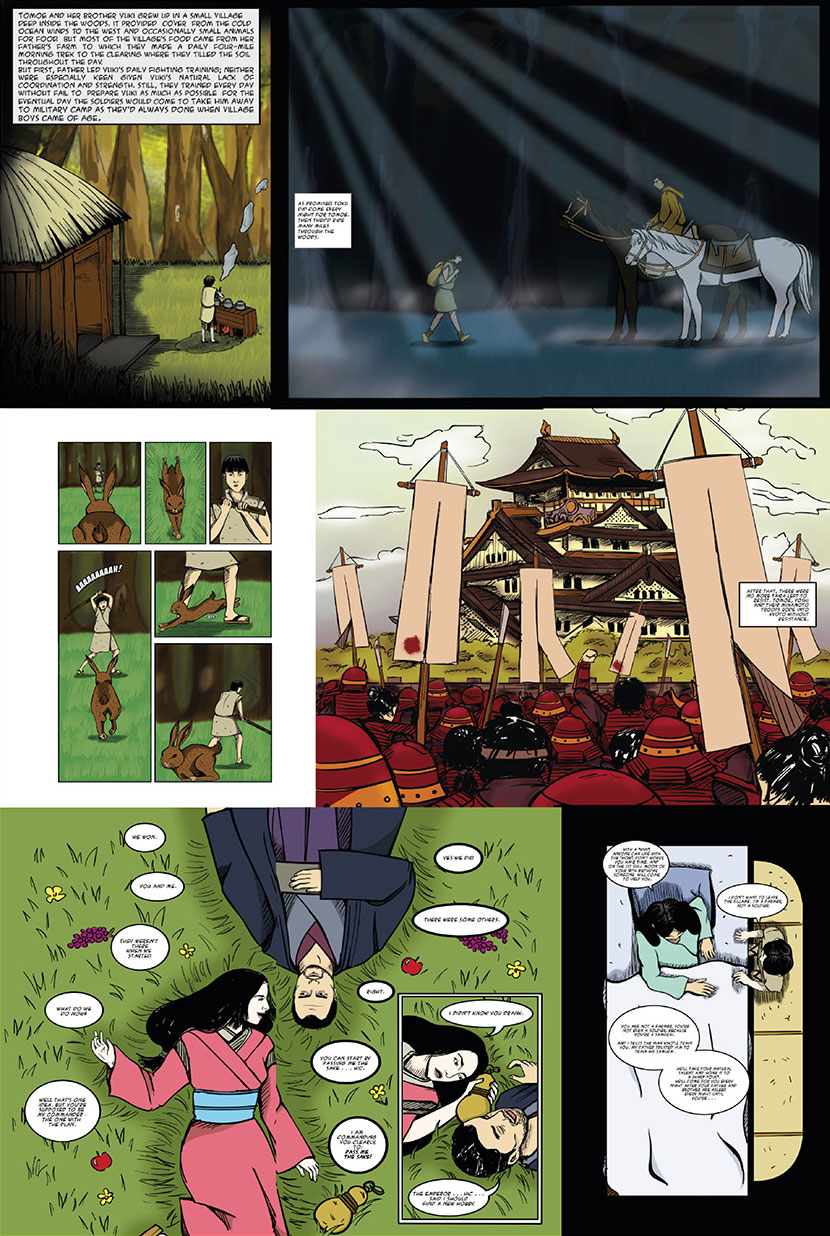
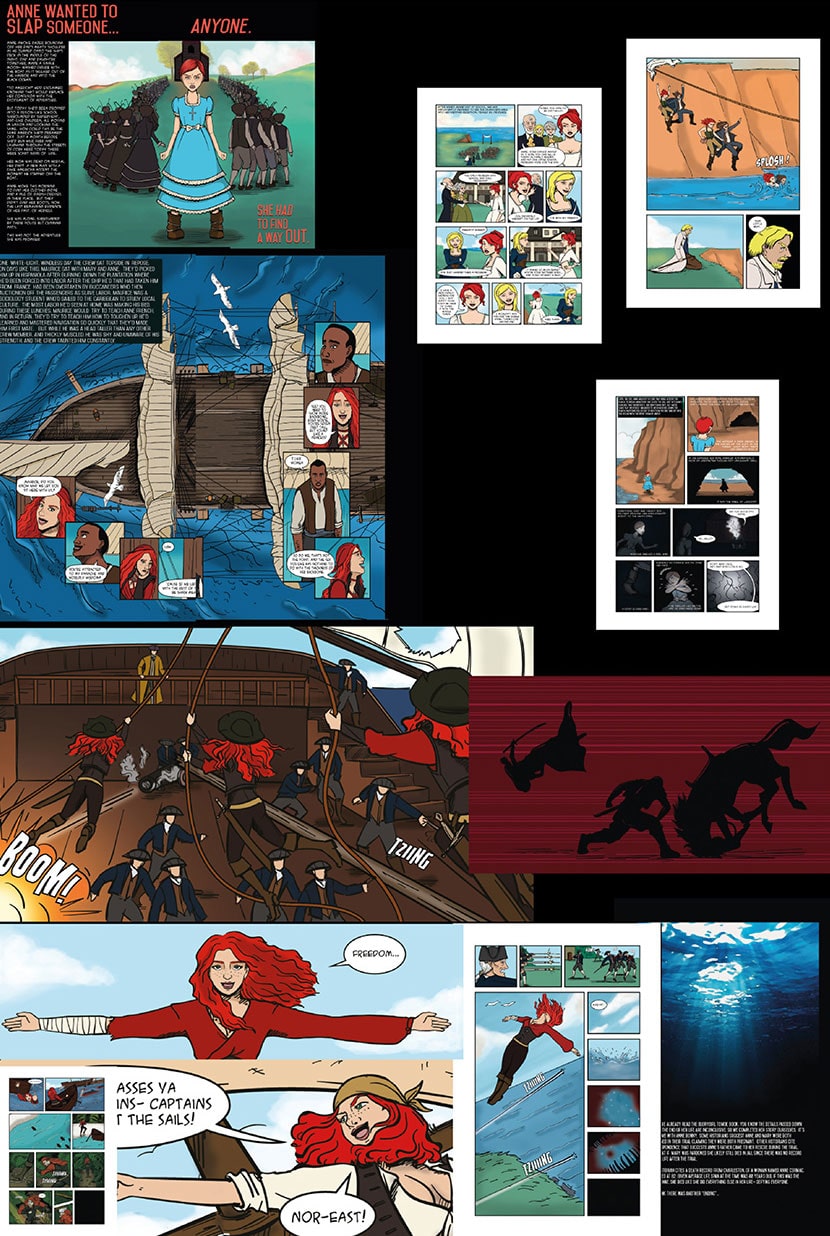
…Anny Bonnie, upper crust Irish princess, fleeing Ireland in the night with a father on the run from the law… to southern antebellum U.S., mocked and ostracized for accent and origin, tomboy to pirate stowaway to pirate captain and freedom fighter.
Each book is written in the tone of the lead “character,” dark, disciplined, brooding but with a heart of gold. Tomoe tells her story, Devil-May-Care but whip-smart and sharp-tongued Anne tells hers.
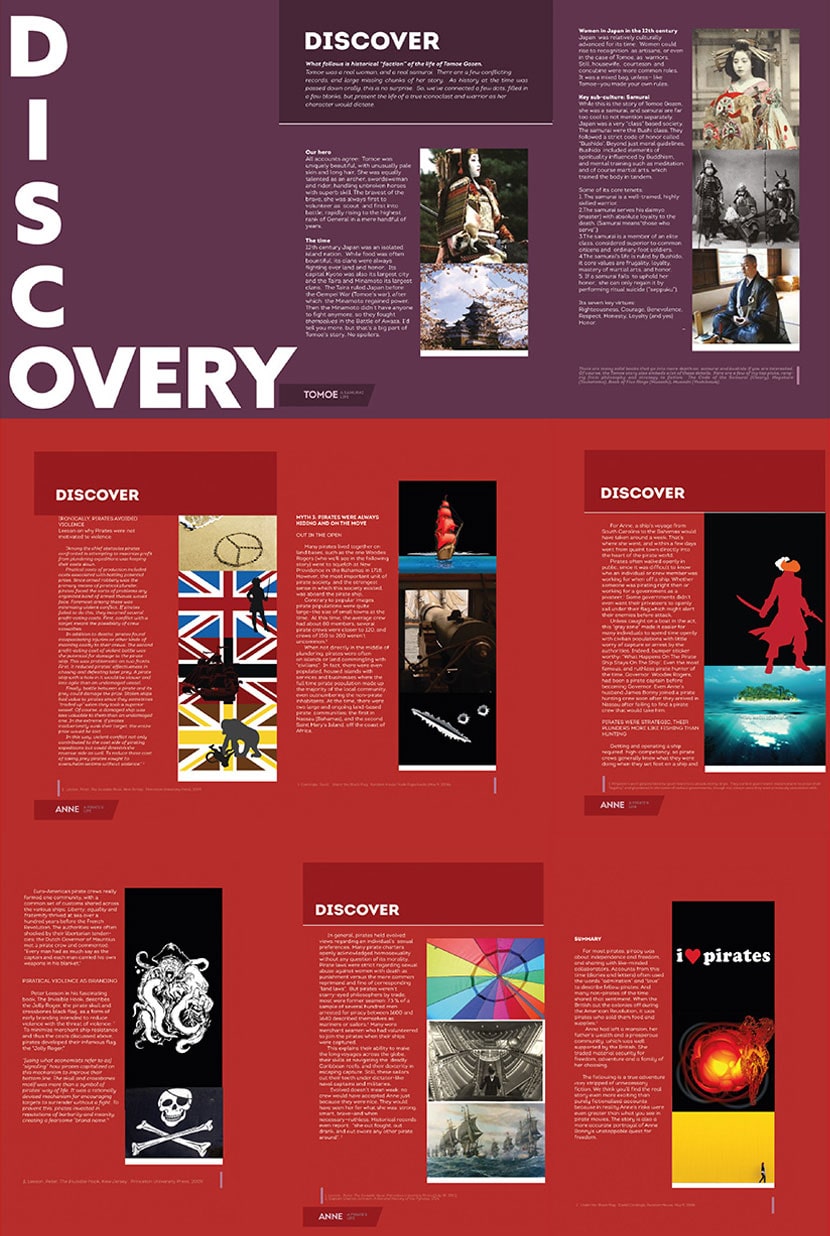
Knowing one primary established channel could be scholastic/academic distribution, and finding we always uncovered lesser known facts about key cultural movements or times, we also included a “discovery” insider section of the time, place and cultural context for each heroine.
In many cases, the challenges to being their full selves was even more constricting in the societies and communities for women at individual time and place.
Illustrating this, and showing what they had to overcome had the purpose of further proving to each reader that if these women could succeed and be true to themselves with higher societal stakes, so could the reader.
Hacks for future heroes:
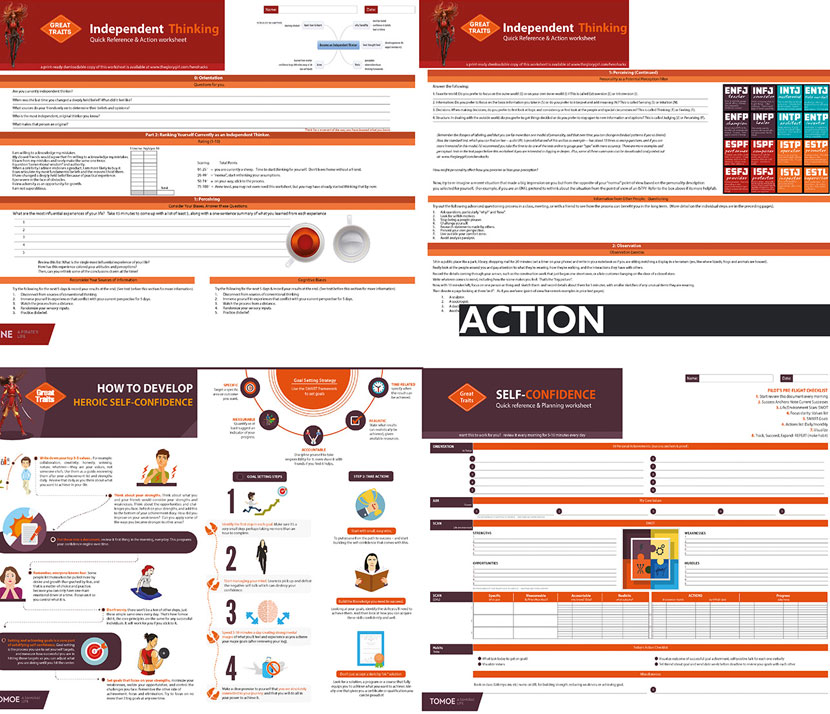
Each book contains a “how-to” section. That is, a step-by-step guide to develop a trait of greatness exhibited by the character in the book. If the reader is only interested in pure entertainment, they can simply read the story.
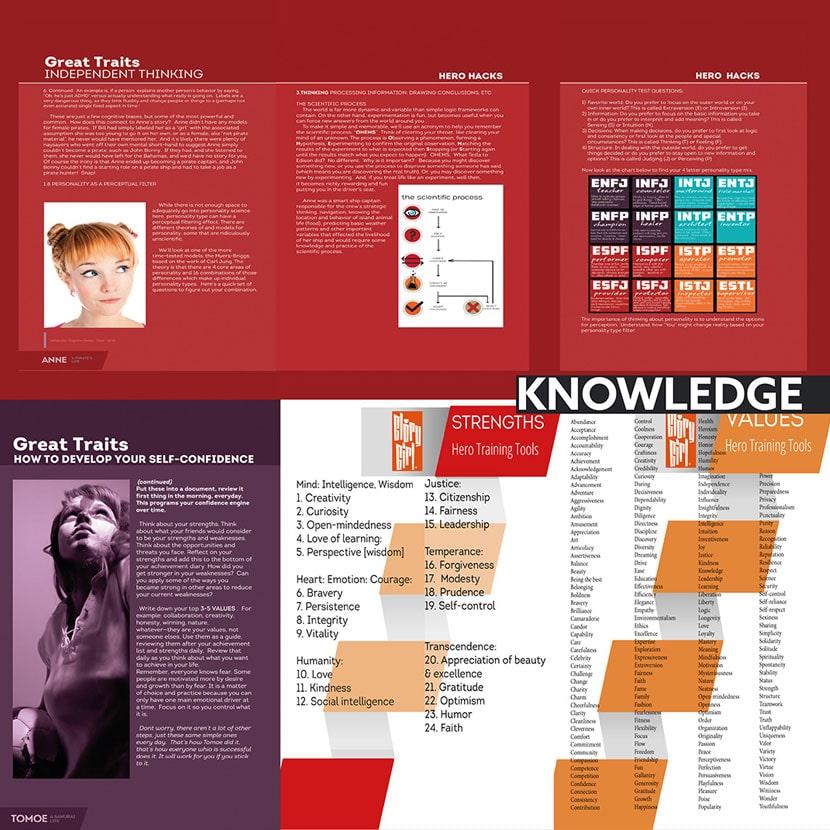
If they are inspired by the heroine, they can develop and measure progress against developing their characteristic strength.
Worksheets and other supporting materials would be available on site as downloads for free.
After completing the first two books, we had 4 galleys printed for each, and before presenting to the client, gave two sets to tweens and young teens in a Manhattan-based public school and a Brooklyn-based STEM school to answer the question of “general appeal” of serious content made fun in graphic novel format.
While we did not ask for the books to be shared, but when we circled back to the individuals who’d received the books, we found they did share with friends. Then we simply asked those individuals to place a contact card in each copy to those they passed the books onto (in exchange for “just keeping them”) which asked for each reader to send us an email if they liked the books.
In a little over 2 months we received over 100 emails from individual readers.
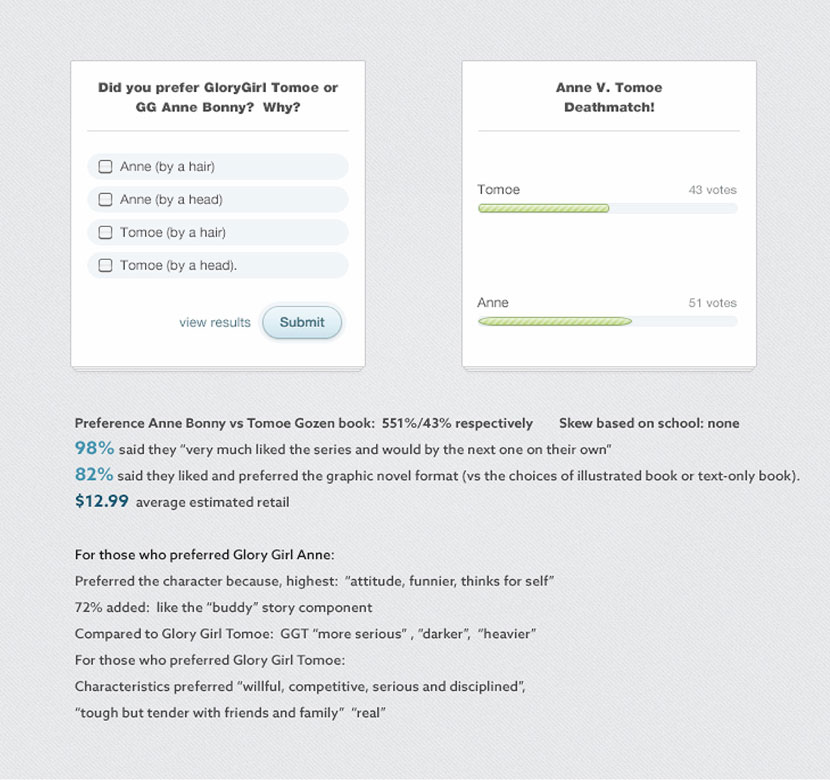
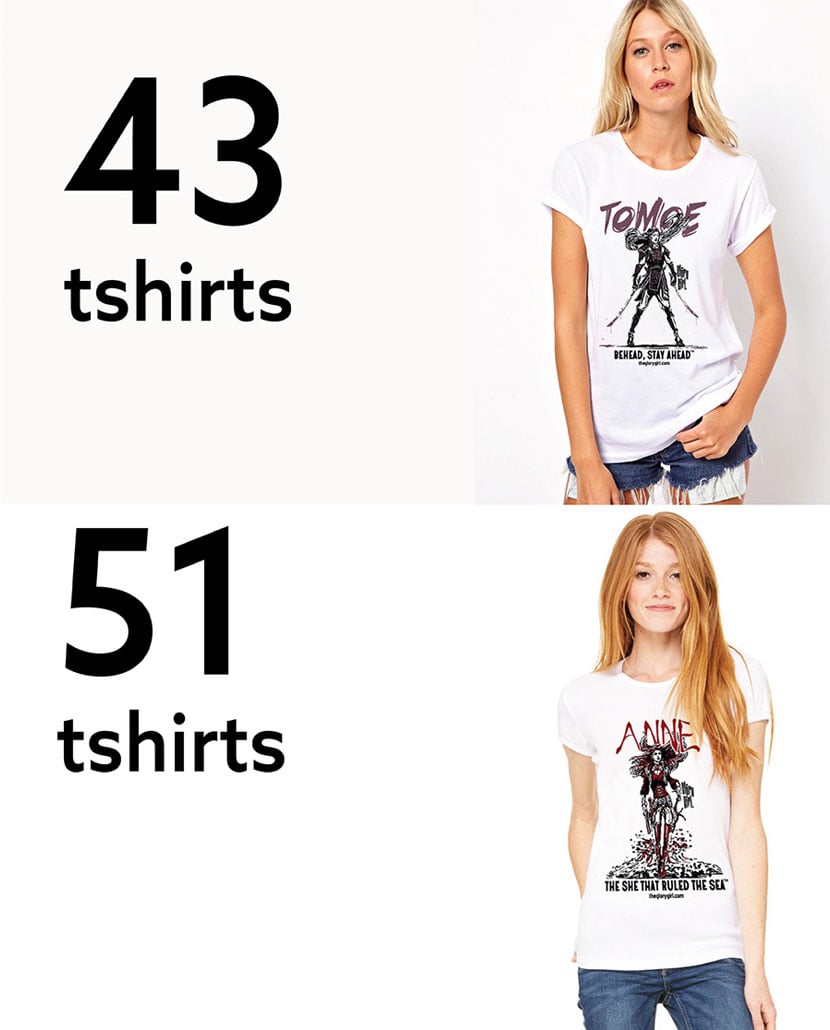
At that time, we set up a quick poll and requested 100 readers to complete a small poll in exchange for a GG t-shirt (specific selected based on their answers).
Key findings from that poll are shown below.
We ended up making more t-shirts than estimated…
Surprisingly (in hindsight perhaps not, as the testing was done in NYC), two of the readers’ parents who were “literary agents” contacted us through the “reply card” form to discuss the project. Before passing their information along to our client, we asked them what they would add or change for publication, and their perspective-add was significantly unique to the readers:
One asked if we’d be open to changing the (heavy-line realistic) illustration style to more Diary of a Wimpy Kid informal line art style as the one change. (And putting the Discovery section in the back). Content itself was “ready to publish”.
The second liked the unique illustration style but said “Tomoe is dark and kind of pedantic… why not the entire series on Anne, or like Anne… that’s upbeat and funny”. So, “Anne-style” / Anne ready to publish.
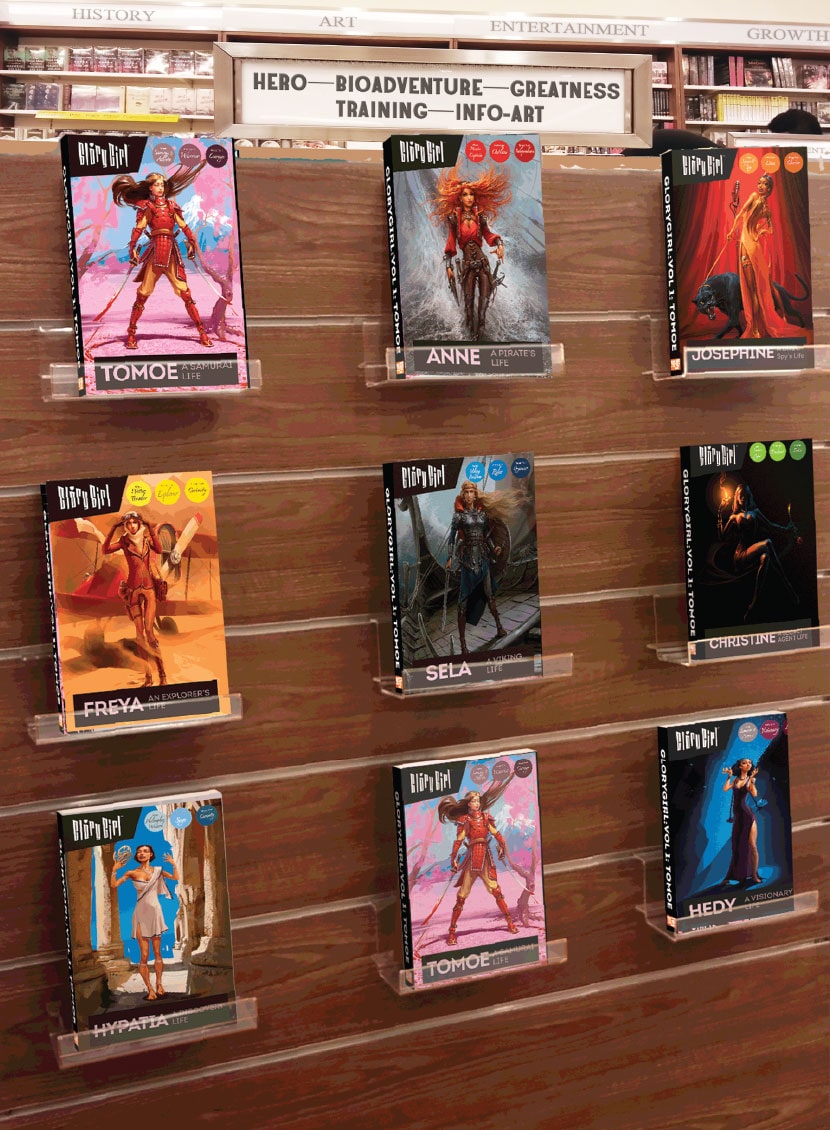
Our contract stipulated three books, we finished the first two over 6 months. We’d originally focused on Josephine Baker’s story for the third (one of our favorite stories but also interesting as the first international Diva à la Beyonce but with added dimensionality of French Resistance and freedom fighter to gifted writer).
After market feedback, we switched our own internal ordering and we completed a script on “Emily” (Emile du Chatelet), who represented a “serious” vocation, as scientist and physicist, but also as a bon vivant, rebel, Royal – but kept– woman, and even gambler (applied mathematics & behind expensive closed doors “card shark”), we knew we could appeal to those preferring the “sassy, funny, rebellious” GloryGirl Anne, while still showing the benefit of applied-will and extreme code of GG Tomoe.
We also experimented with the illustration style by hiring a “digital painter” for more hyper-realistic visual language, though we did not revert to an (infantile) Diary of Wimpy Kid informal line style as rec’d by one expert.
Also, while we always want to keep it “real” both in character behavior, but with key facts, dates, and events, we used this third book to experiment with “time”, and reset it in current day (Paris), with motorcycle versus horse racing. Actual events (being on the run from black-ops but government hired “silencers” for introducing “non-politically supportive” ideas, including Newtonian physics vs French Cartesian based physics, in this case, Quantum Physics versus Newtonian and encouraging independent thinking vs media endorsed “ways” are real events, modified only in “face” and not “form”.)

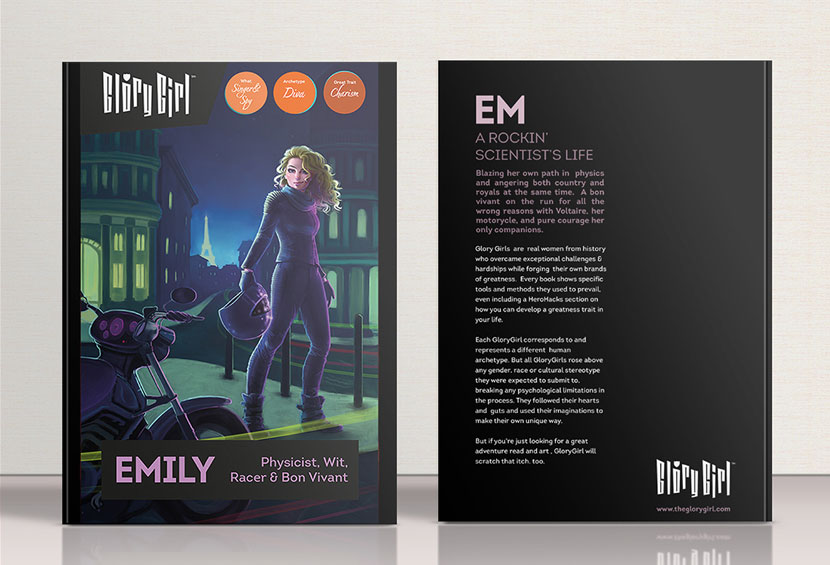
We also experimented with the illustration by hiring a “digital painter” versus line illustrator, for more hyper-realistic visual language, though we did not revert to an infantile Diary of Wimpy Kid “informal” line style. Also, while we always want to keep it “real” both in character behavior, but with key facts, dates, and events, we used this third book to experiment with “time”, and reset it in current day (Paris), with motorcycle versus horse racing. Actual events (being on the run from black-ops but government hired “silencers” for introducing “non-politically supportive” ideas, including Newtonian physics vs French Cartesian based physics, in this case, Quantum Physics versus Newtonian and encouraging independent thinking vs media endorsed “ways” are real events, modified only in “face” and not “form”).

We plan on completing a printed galley of the third book, using the same earlier [viewers?] for comparative feedback, and then submitting all three to the client by end of 2018 (as per the client deadline), though we’ve already submitted galleys for the first two so that the client can prepare their own marketing support before the third is completed.
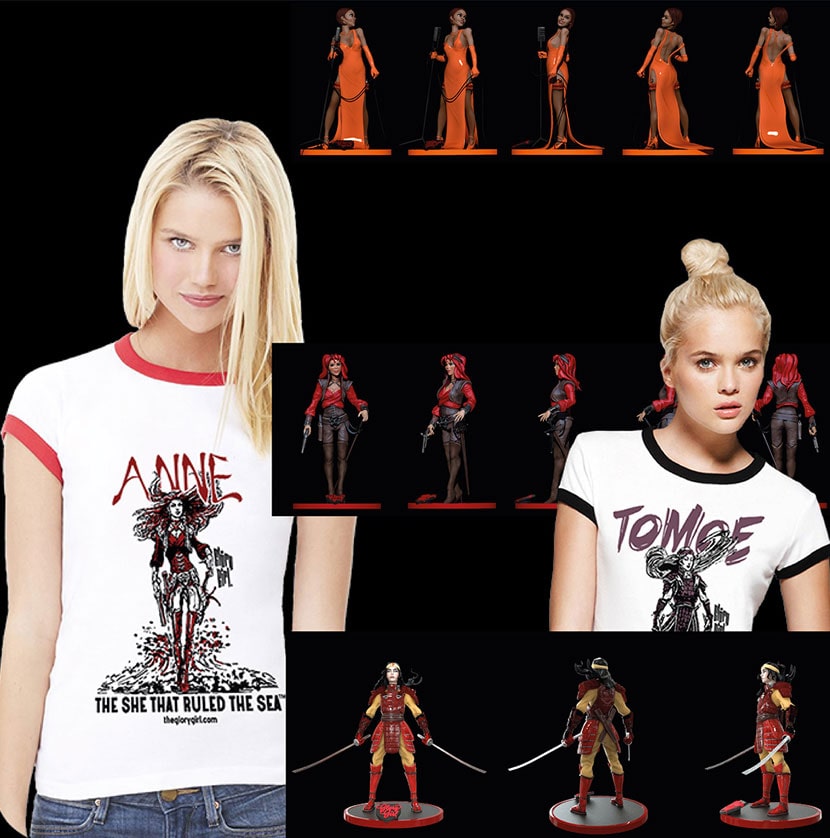
We also created a series of merchandising and media extension examples to show the true breadth of opportunity for the client if Glory Girl was an entire platform.
Beyond t-shirts to short films and 3D action figures.