
Through a suite of proprietary Sphere-Video communication and AI re combinatorial software properties to own their future: businesses.
Client:
Verizon
CG (now a subsidiary of Alphabet Inc.) had been tasked by Verizon to “create some web apps for its business customers” yet without a brief as to what they would do. EGG already had a product in development that was not a fit for its client Omnia (separate from the spherical 3D A/V sensor), a spherical audio and video telepresence device. In addition, it had already been developing a unique related app for scheduling meetings across offices and groups using a real-time optimization algorithm, and had another SaaS app concept that, reconfigured, would make sense in the context of the separate components for Verizon.
Verizon was losing ground in its core profit segment: U.S. business customers. They led in mobile coverage, had the biggest data centers, and yet trailed their telco competitors in proprietary product design on superior proprietary hardware side (e.g. Motorola) or proprietary digital/software solutions (AT&T with Cisco in teleconferencing). While they were a single share leader, the market itself was becoming more fragmented, and their annual profitability had been slipping, year after year for a decade. The one profitable uptick was in supporting small to medium businesses, though Verizon was not yet even a blip on the radar in this vertical.
While these businesses were more concerned with cloud computing, big data analytics, and hardware, with many focusing on VoIP and not wireless or landline for communication, the one major increase in spending had been around team communications, conference telephony, and communication technologies that were rich enough to cut down on travel-related costs. Verizon completely lacked their proprietary products (let alone portfolio), outside of data networking. They wanted to focus more on their business customer segment, but had lost round 1 in the domain of telepresence to AT&T who now dominated through a $1 billion Cisco-Polycom partnership investment, though Verizon had just spent millions on a whitepaper from a consultancy on the benefits of high-speed teleconferencing for businesses in a weak attempt at marketing for its FiOS services.
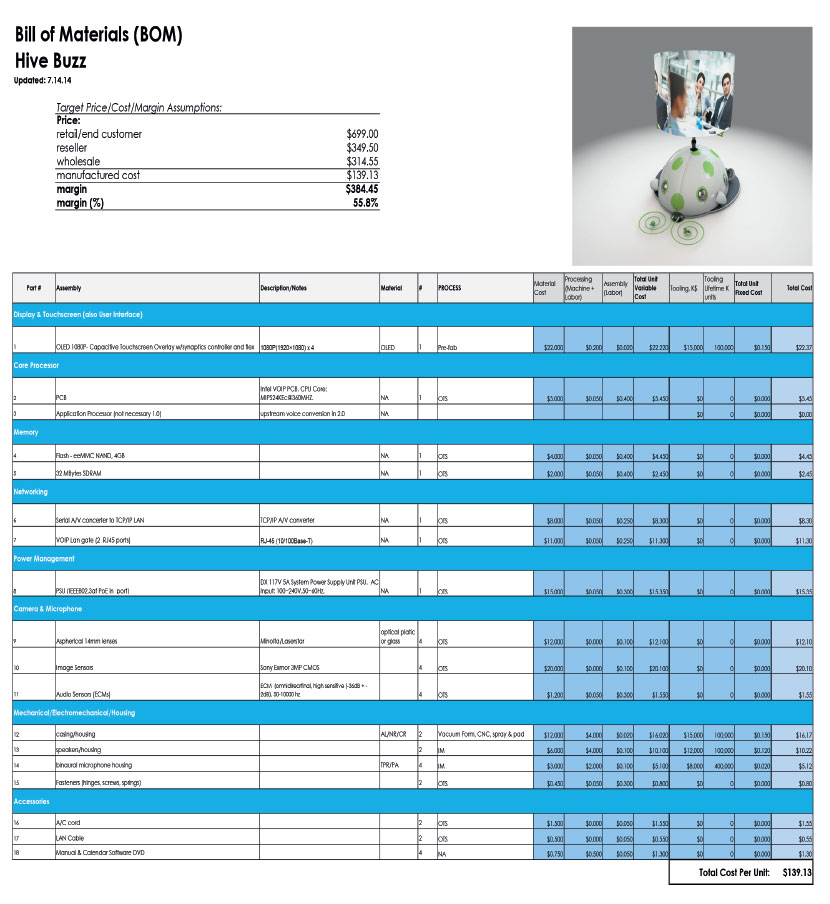
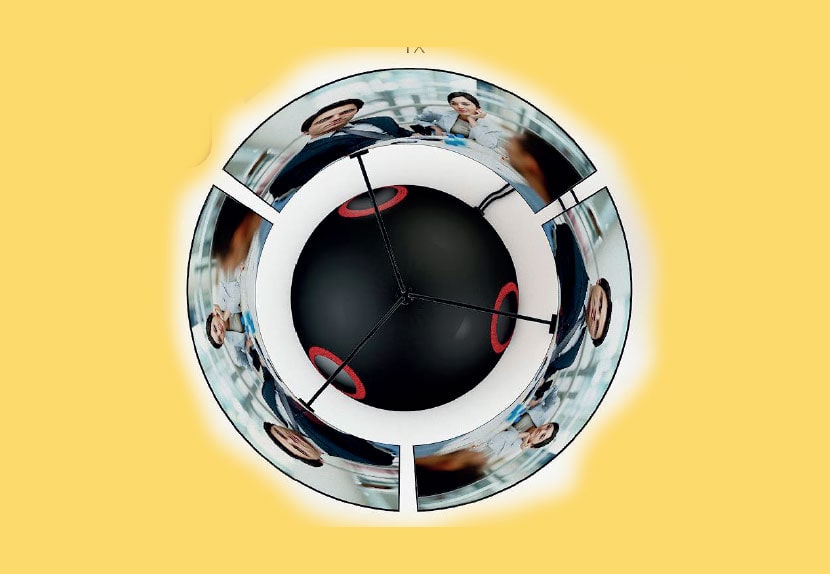
The first upstream solution was a portable team conferencing product that could deliver high-definition panoramic audio and video over standard FiOS lines between multiple offices for under $1000 versus Polycom’s RealPresence Immersive, a custom $1,000,000 build-out for Fortune 500s. Named “Hive” for its collective connection but also broader human data mining capabilities, it could also be Verizon’s first multi-patent, proprietary high-end product design–brand association, and – unique to competitors – the entry wedge into SMB, heavier on fast-scale MB’s for ownership.
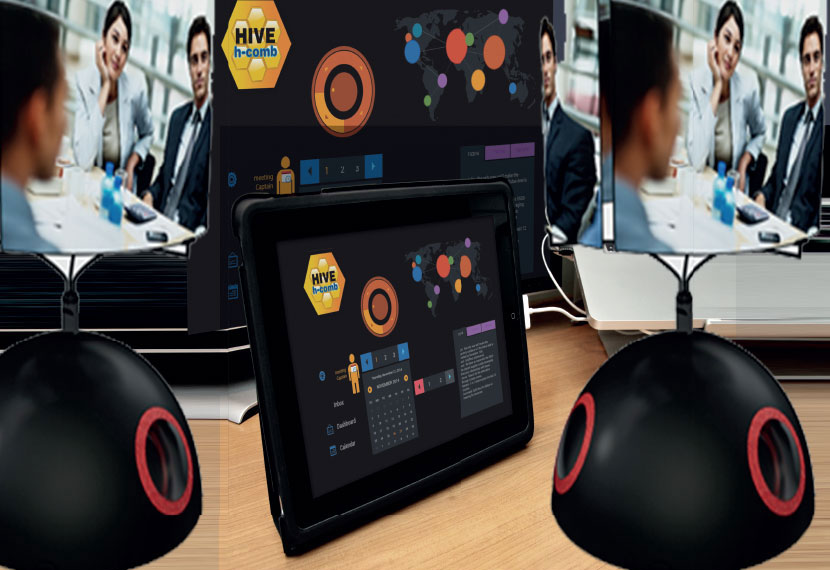
While this Hive product ran on its own, there was an opportunity to layer in a related solution in a web application w/algorithm to optimize scheduling, automatically receive text transcripts from conference within a monitor of the conference (v. memory & notes), which was delivered to IA centralized database of all co. conferences, effectively creating a high-level searchable database for corporate intelligence.
When developing the sphere video data compression algorithm for Hive to run across basic T1 lines globally, we found an unexpected second-order challenge. For these multi-office multi-nationals, a single meeting could require a couple of days of the work of two to three admins simply to coordinate and reprioritize executive calendars, even using “automated calendaring evites.” 80% of the time, meetings proposed were switched to times based on availability of executives prioritized by seniority versus role or domain. Given the average hourly comp and loss of information and recombinatorial opportunities for brains falling through the scheduling crack, we estimated this “little” issue to be worth in the low millions as far as lost productivity, and without cap on the lost potential for actionable strategy-shifting ideas dependent on the right minds interacting on the right topics at the right times.
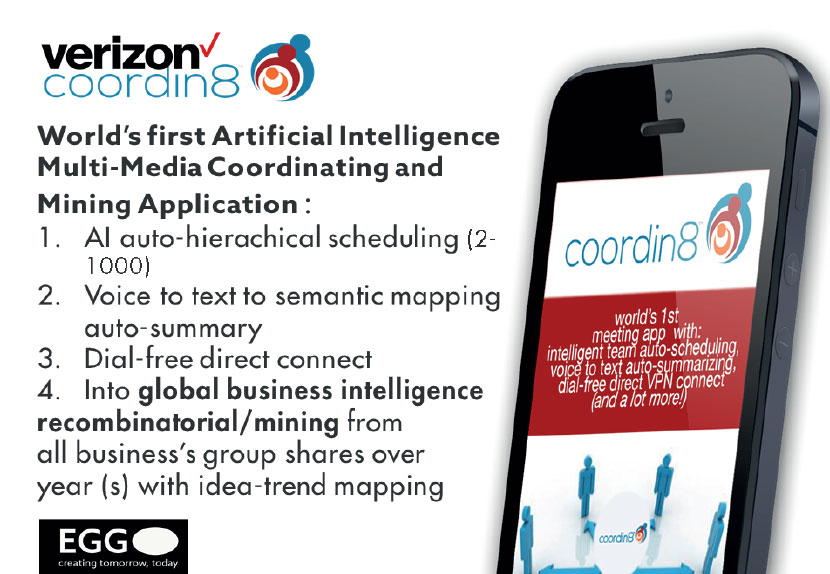
So we embedded an intelligence engine in the broader Hive scheduling application that would satisfice based on all schedules, heavier weighing domain expertise across goal/meeting outcome before seniority, then based on second-level conflicts, weighing those conflicts and flexibility based on type of move or reschedule them in the cases where the company potential benefit far outweighed the individual absence. For example, on a next step core infrastructure for data mining meeting, over a 2 week period, the best time was modelled based on the best and second best availabilities for the lead data engineer, lead data strategist, and then VP of data warehousing (most senior, but least involved in these decisions), before moving the CIO from a “personal” (personal training) meeting into this spot, and emailing the contact with a requested move. This was significant enough on its own to warrant development for a stand-alone product, but our priority was in developing a semantic engine that could understand both spoken and body language, pattern meaningful contributions towards company goals, and save core semantic-tagged voice-text archives of any meetings, while making them live searchable across the enterprise. Automatically cross-indexed by category of discussion to create a database across all department conversations on individual topics, and of course, store in long-term archives efficiently for later use in a bigger data map.
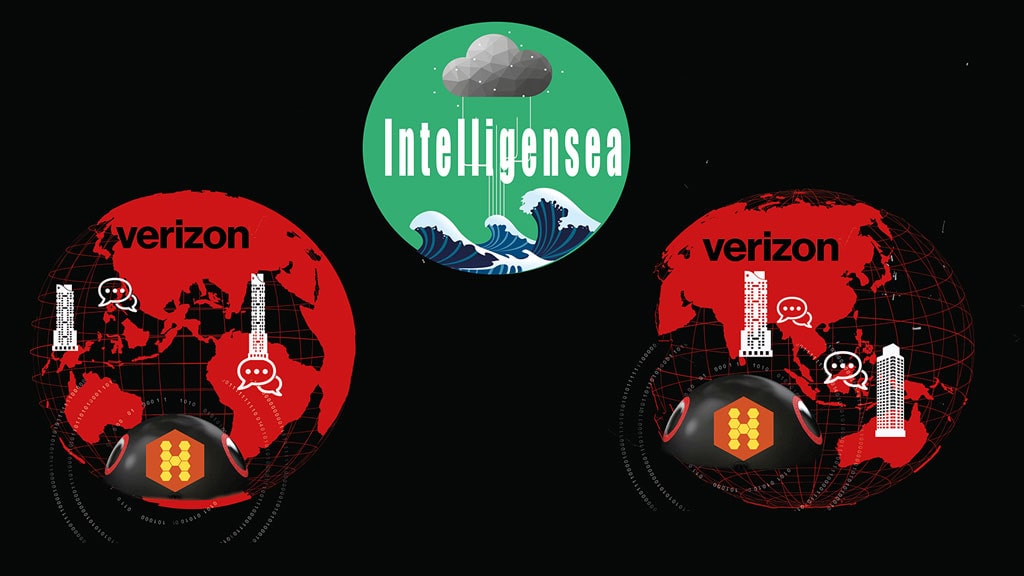
Solution (3)
Global enterprise cogitative data - Contextualized from conversation to conversion, idea to spin-out. This also leveraged some of Verizon’s currently underutilized assets in a new competitive way – large high-powered data centers located throughout the country. Even though on cloud, these data centers for private client data for protection but also for mining, which over time Verizon individually could business intelligence or partner with a specialist such as Wipro to resell actionable data to clients.
01 //
Physical design and engineering behind the physical sphere A/V telepresence product.
02 //
Initial programming flow and product specs and visuals for coordination, voice to text meeting conversion and viewing/database search app.
03 // Next
Initial programming flow and product specs for business app with initial UI.