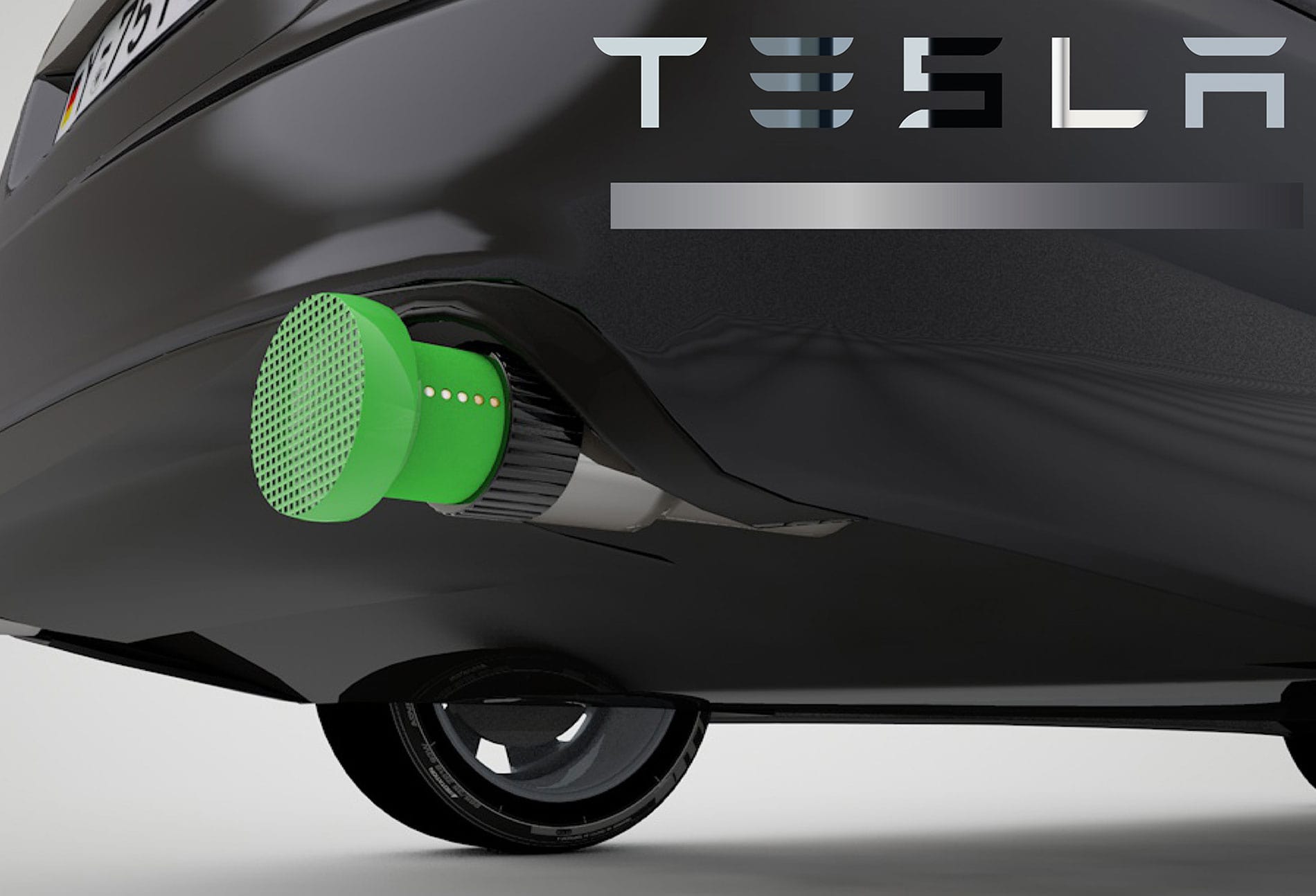
The first consumer-simple exhaust heat-converter that generates and stores enough energy from daily driving to power the electrical needs of small family homes
Client:
Private contractor for Tesla
(White labeled for Tesla Motors India initiative)
50% of air pollution in the U.S. and 70% in China comes from fossil-fueled automobiles. There are now over 1 billion fossil fuel powered automobiles globally, producing over 1 billion tons of CO₂ daily, but also expelling toxic levels of other pollutants, including lead, throughout major urban areas. India produces the largest concentration of pollution (PSI) in the world, with every major Indian city producing significantly more than Mexico City and to New York City, combined.
Unfortunately, affordable electric cars won’t come soon enough as over 1 million new cars are sold into India alone on a monthly basis, or over 20 million new cars introduced to that country on an annual basis every year.

Tesla Motors produces vehicles that have minimal environmental impact on the world. Looking 10 years out, one of their key geographical regions is India. However, knowing they would need to vastly modify their current core systems and materials to reach an acceptable end-retail for that market, they tasked one of their core component suppliers to find a “Tesla” way to enter the market, and that task ended up in EGG’s RFP inbox.

The first reframe was looking at the macro-market needs and issues, and instead of thinking of what Tesla could provide as an alternative transportation source, what technology it could introduce to help reduce the negative impact of the 1 million new fossil-fuel cars being sold and added to already congested Indian roads per year.
In discovery, what was shocking to EGG while performing Discovery was that while the majority of cars sold into India did use standard exhaust systems, there were advanced filtration systems available that were not; at a 1000% premium to standard mufflers, the majority of Indian consumers balked at the total package price. So we knew we could not simply create a more compact and efficient filtration exhaust with added design-for-manufacturing to reduce costs, but needed to find an appealing value-add that was obvious to the end-consumer on a daily basis.

Another macro-issue most Indian auto owners faced at home was that, for the over 1.3 billion homes without electricity, there is the equivalent amount of Indian family homes with periodic energy due to chaotic infrastructure combined with rerouted or pirated energy from local community hubs exacerbating an already fault-ridden system.
The solution for tens of millions of Indian homes is the use of diesel fuel power generators, often run daily to charge in-home auxiliary batteries.
Of course, all of this exhaust runs out either in those homes, or outside into their densely packed neighborhoods further compounding the global density of pollution for the region.

We also understood, from a thermo-mechanical perspective more than 66% of the energy released in burning fossil fuel is wasted as heat and released to the environment. 63% of this energy, as heat, heat runs off through exterior exhaust components.

To EGG, the solution was clear. Design an after-market exhaust add-on, that was simple to use, easy to add and remove from 80% of standard tail-pipes, had both a pollution filtration system, and a mechanism to convert heat to electrical energy and store it in its own embedded battery for use later in owner’s homes. This “converting waste to life” is what inspired us to name the system and product “Convitro”.
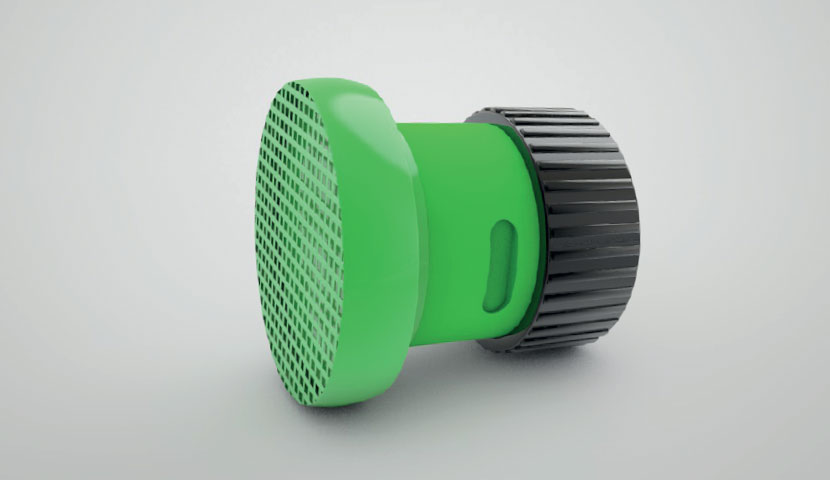
Convitro is the world’s first plug-n-play exhaust-adaptor that captures and converts heat to electrical energy, storing it in the mechanism which can be removed and used in home to transfer energy to in-home back-up batteries easily and to power a standard 3 person family’s night time electrical needs for up to three hours (based on average car use time).
Simple and secure interface that has been designed to attach to over 80% of all standard pipes via a twist lock. Indicator alerts user when battery cell is fully charged to remove and transfer energy at home. Needs for up to three hours (based on average car daily use time).
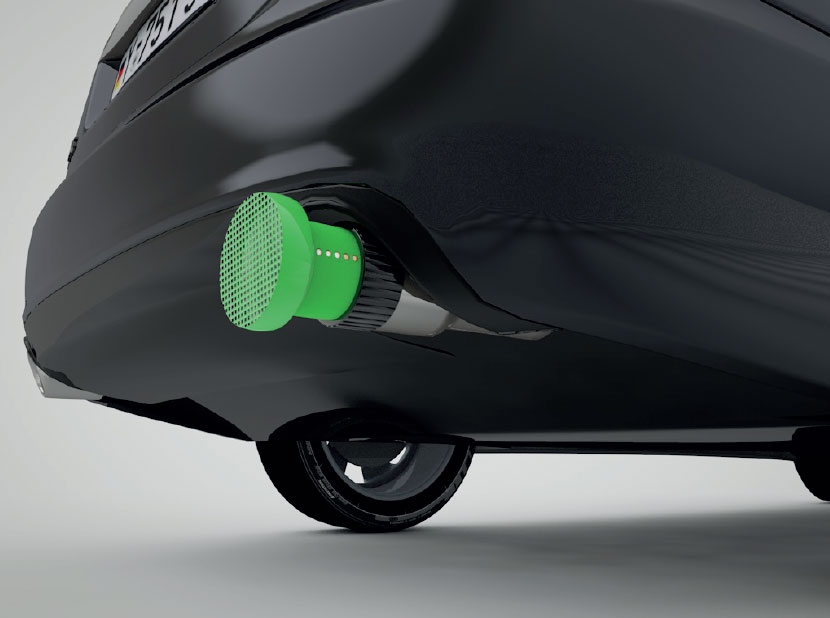
(As shown from first working proto; not final form factor)

Technical development
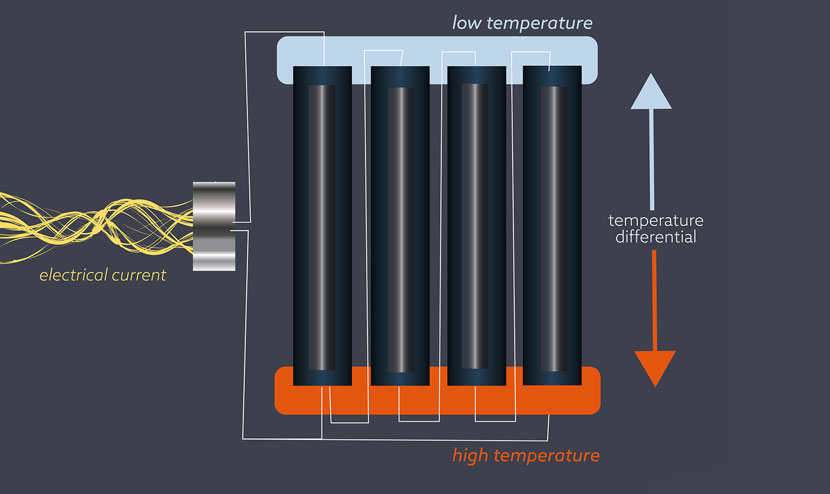
Three component chambers, from heatsink and thermo-electrical converter and battery to particle filter, finally cooling chamber towards edge-exterior for ease of removal by user within 5 minutes from last use. The heat differential from excess heat and baseline created energy that is then converted to…
Convitro mechanoelectrical premise
From a mechanical-electrical perspective, the excess energy continues to move through the system, and is stored in a power cell as it is converted to electrical energy. This cell can then be connected to a larger in-home battery as a charging source, and transmit up to a full charge in less than 10 minutes, dependent on the target cell configuration.
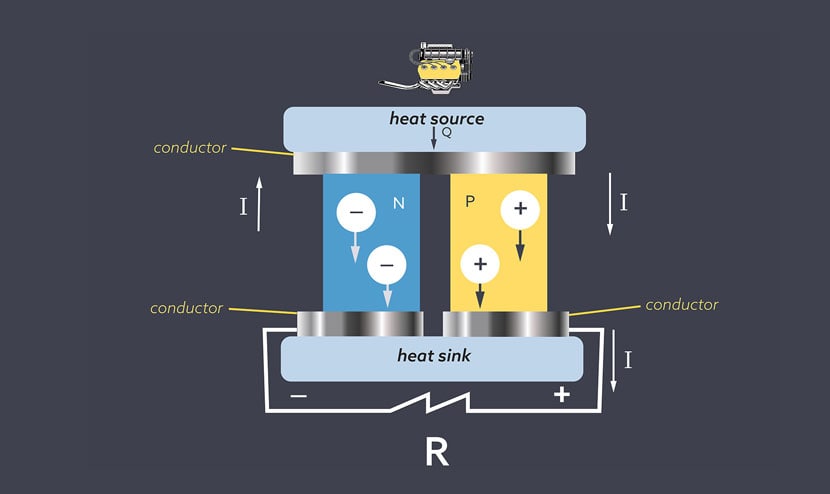
Convitro thermoelectrical basis
01 //
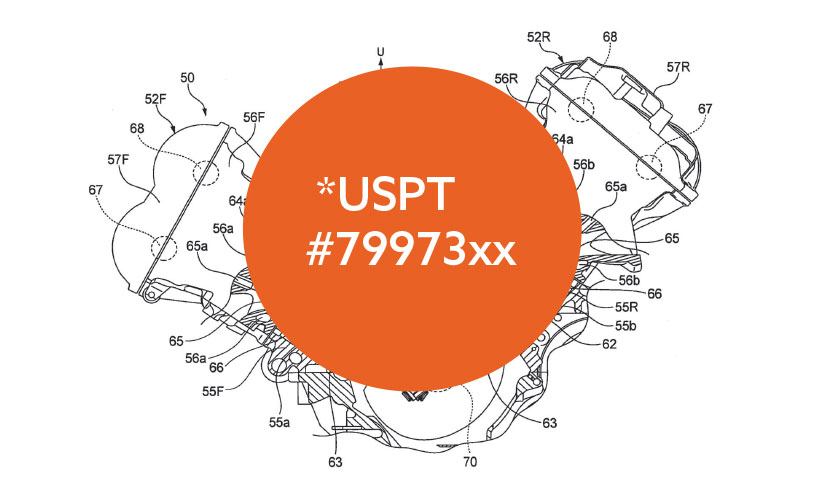
Based on project configuration, the above patents auto-assign to the client as published with a sub-license option for their client.
02 //
Current cost-plus: $243 USD, which is approximately 32% of the delivered cost of advanced filtration (only) systems currently available.
Additionally, based on initial testing, if used for 3 continuous hours per day, over 52 weeks, Convitro can generate approximately $400 (USD) worth of electricity (based on U.S. market rates) per year; paying for itself in the first year while also helping reduce pollution/contribution for every car using it.
03 //
Based on client’s co-distribution configuration, with their in-market distributor partner owning approximately 22% share of all automobiles imported into India, if sold as an “always” after-market add-on, the approximate revenue generated on a monthly basis (assuming 50pt cost-plus) is $128,304,000 in revenue generation on a monthly basis (as full penetration), and approximately $1.5B per annum.